Introduction
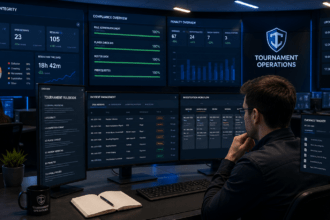
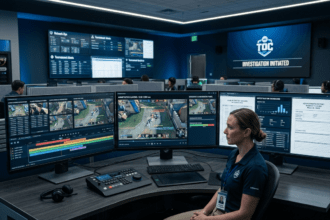
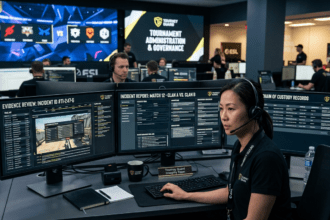
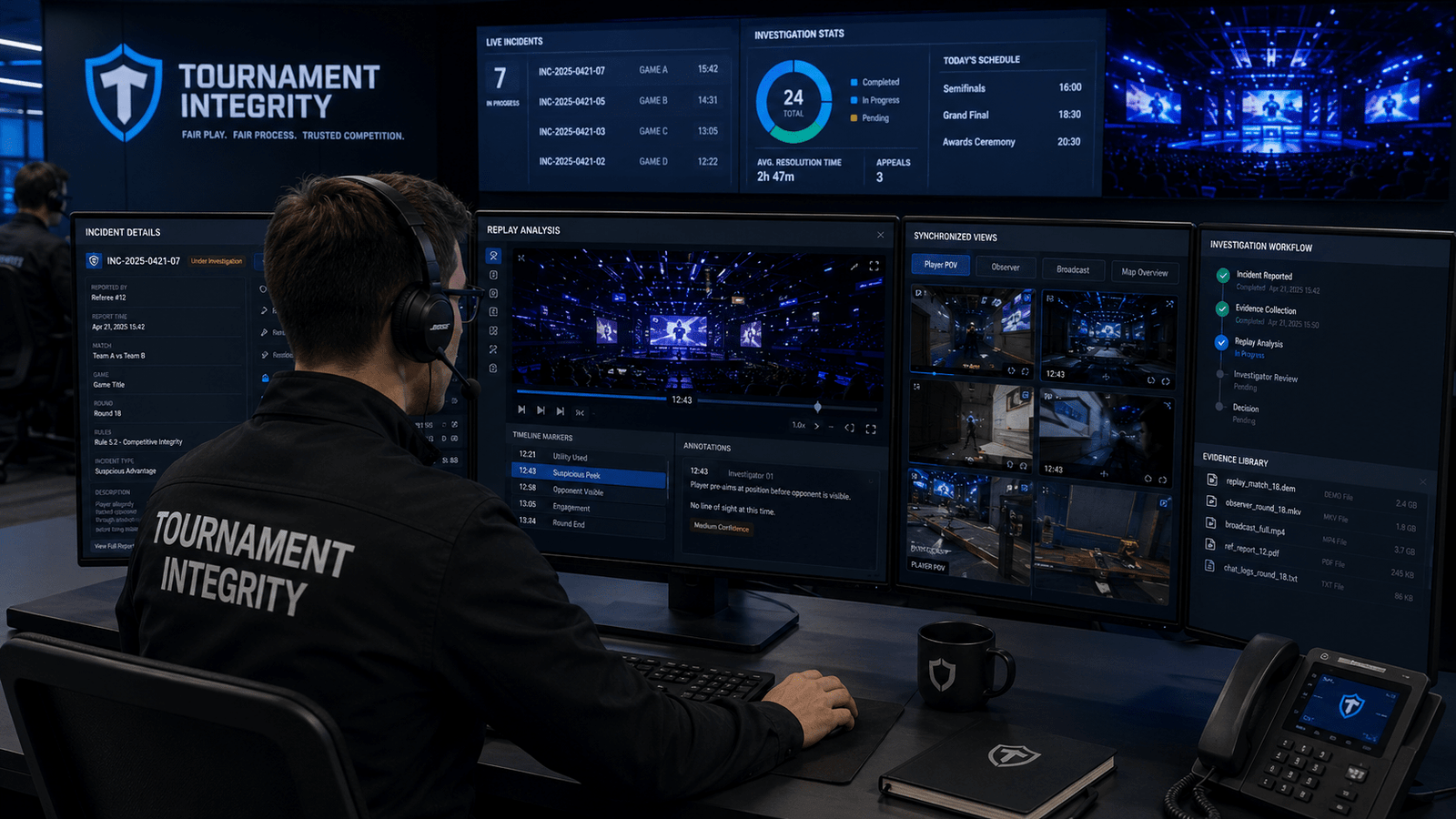
Match Replay Analysis Best Practices are fundamental to conducting fair, objective, and defensible esports investigations. While match replays are often considered one of the strongest forms of evidence available to tournament officials, simply watching a replay is not enough to reach reliable conclusions. Effective replay analysis requires structured procedures, consistent evaluation criteria, and careful documentation to ensure that every disciplinary decision is based on verifiable facts rather than subjective interpretation.
Modern esports tournaments generate vast amounts of replay data, observer recordings, spectator perspectives, and game telemetry. When incidents such as suspected cheating, exploit abuse, collusion, stream sniping, or rule violations occur, replay analysis frequently becomes the centerpiece of the administrative investigation. However, without standardized analysis methods, two investigators reviewing the same replay may reach completely different conclusions.
This guide explains how tournament organizers can establish professional replay analysis procedures, reduce investigator bias, improve evidence quality, and strengthen tournament integrity through repeatable operational workflows. Whether you’re managing community events or international championships, adopting best practices for replay analysis helps ensure fairness, transparency, and confidence in every investigation.
What Is Match Replay Analysis?
Match replay analysis is the structured examination of recorded gameplay to determine whether a tournament incident occurred, understand the sequence of events, and evaluate whether tournament rules were violated.
Unlike casual replay review performed by players or commentators, administrative replay analysis is an evidence-based investigation process. The objective is not to criticize gameplay or evaluate player skill, but to establish factual findings that support fair decision-making.
Replay analysis may be used to investigate incidents involving:
- Suspected cheating
- Exploit abuse
- Unsportsmanlike conduct
- Match manipulation
- Rule violations
- Incorrect referee decisions
- Technical disputes
- Tournament platform issues
- Player misconduct
- Team communications (when available)
Within a professional tournament governance framework, replays represent one component of the overall evidence collection process and should always be evaluated alongside other available evidence.
Replay Analysis vs. Watching Gameplay
Many new tournament officials assume replay analysis simply involves watching the match from beginning to end.
Professional investigations require significantly more.
| Watching Gameplay | Match Replay Analysis |
|---|---|
| Focuses on entertainment | Focuses on evidence |
| Observes the match | Investigates incidents |
| Personal interpretation | Objective evaluation |
| General viewing | Structured methodology |
| No documentation | Formal investigation records |
| May overlook details | Uses repeatable procedures |
Effective replay analysis answers questions such as:
- What exactly happened?
- When did it happen?
- Which players were involved?
- Which tournament rules apply?
- What evidence supports the conclusion?
- What evidence contradicts the conclusion?
- Are additional evidence sources required?
These questions transform replay review into a professional investigative process.
Why Match Replay Analysis Matters
For Players
Players expect disciplinary decisions to be based on facts rather than assumptions.
A structured replay analysis process helps ensure:
- Equal treatment
- Consistent investigations
- Objective findings
- Transparent disciplinary decisions
- Fair appeals
This strengthens trust in tournament administration.
For Tournament Organizers
Tournament organizers are responsible for maintaining competitive integrity throughout every event.
High-quality replay analysis enables organizers to:
- Resolve disputes efficiently
- Reduce investigation errors
- Support disciplinary decisions
- Improve operational consistency
- Build confidence among participants
As tournaments grow in size, standardized replay analysis becomes increasingly important.
For Tournament Officials
Referees and investigators frequently review multiple incidents during a single event.
Without standardized procedures:
- Important details may be overlooked.
- Investigators may reach inconsistent conclusions.
- Decisions become difficult to justify during appeals.
- Administrative workloads increase.
Structured replay analysis provides investigators with a repeatable framework for evaluating every case.
For Sponsors
Sponsors seek tournaments that demonstrate professionalism and operational maturity.
Consistent replay analysis procedures reduce controversy and reinforce confidence that competitive disputes are resolved fairly and transparently.
For the Esports Community
Public confidence depends on more than making correct decisions—it also depends on demonstrating how those decisions were reached.
Transparent replay analysis procedures help communities understand that tournament rulings are supported by documented evidence rather than speculation.
Core Principles of Match Replay Analysis
Professional replay analysis is built upon several foundational principles.
1. Objectivity
Investigators should analyze events without preconceived conclusions.
The replay should answer the questions—not confirm an existing opinion.
Investigators should actively search for evidence that both supports and challenges their initial assumptions.
2. Completeness
Individual clips rarely tell the entire story.
A complete analysis considers:
- Events before the incident
- The incident itself
- Events immediately afterward
- Related player actions
- Context surrounding the decision
Evaluating only isolated moments increases the risk of incorrect conclusions.
3. Repeatability
Different investigators reviewing the same replay should arrive at similar conclusions when applying the same methodology.
This requires:
- Standard investigation procedures
- Defined review criteria
- Consistent documentation
- Common terminology
Repeatable processes improve fairness across all tournaments.
4. Evidence Corroboration
A replay should rarely be the only source of evidence.
Whenever possible, replay findings should be compared with:
- Match logs
- Referee reports
- Player statements
- Observer recordings
- Server events
- Voice communications (when available)
- Tournament platform records
Corroborating multiple evidence sources increases confidence in the investigation.
5. Documentation
Every significant observation should be documented.
Rather than writing:
“Player looked suspicious.”
Investigators should record:
“At 12:43, Player A tracked an unseen opponent through terrain before line-of-sight was established. This behavior occurred three consecutive times during the same round.”
Objective documentation produces stronger investigation reports and simplifies future appeals.
6. Consistency
Every incident should follow the same replay analysis workflow regardless of:
- Player reputation
- Team popularity
- Tournament size
- Prize pool
- Community pressure
Consistent investigative practices are essential to maintaining competitive integrity.
Establishing a Replay Review Standard
Every tournament should define a standard operating procedure for replay analysis before the event begins.
At a minimum, the procedure should specify:
- Which replay sources are considered official.
- Who is authorized to review evidence.
- How observations are documented.
- When additional evidence must be collected.
- How disagreements between investigators are resolved.
- How replay findings are incorporated into incident reports.
Creating these standards in advance reduces uncertainty during high-pressure investigations and ensures that every case is handled using the same governance framework.
A Professional Workflow for Match Replay Analysis
Tournament investigations become significantly more reliable when every replay is analyzed using a standardized workflow rather than individual judgment.
The following process can be adapted for tournaments of any size.
Step 1: Define the Investigation Scope
Before opening the replay, investigators should clearly identify the purpose of the review.
Questions to answer include:
- What incident is being investigated?
- Which tournament rule may have been violated?
- Which players are involved?
- What time did the incident reportedly occur?
- What evidence already exists?
Without a clearly defined scope, investigators often spend unnecessary time reviewing unrelated gameplay.
Step 2: Preserve the Original Replay
The original replay should always remain untouched.
Best practices include:
- Store the original replay in a secure evidence repository.
- Create a working copy for analysis.
- Assign a unique Evidence ID.
- Record collection date and source.
- Link the replay to the corresponding incident.
This protects evidence integrity and supports future appeals.
Step 3: Review the Entire Context
One of the most common investigation mistakes is reviewing only a short clip shared on social media.
Professional investigators examine:
- Events before the reported incident
- The incident itself
- Player behavior after the event
- Previous rounds
- Similar situations throughout the match
Context frequently changes the interpretation of isolated actions.
For example, what initially appears to be suspicious wall tracking may simply be a player following teammate callouts or predictable map rotations.
Step 4: Review Multiple Perspectives
Whenever available, investigators should compare several viewpoints.
Possible replay perspectives include:
- Player POV
- Observer camera
- Spectator replay
- Free camera
- Team perspective
- Broadcast footage
Each perspective provides different information.
A player’s first-person view may explain reaction timing, while the observer replay may reveal positioning that was not visible from the player’s perspective.
Step 5: Identify Key Moments
Rather than reviewing the replay linearly multiple times, investigators should mark significant timestamps.
Example timeline:
| Timestamp | Observation |
|---|---|
| 04:18 | First suspicious engagement |
| 06:42 | Possible exploit usage |
| 09:51 | Unusual movement pattern |
| 13:08 | Rule violation confirmed |
| 15:27 | Match conclusion |
Timestamp indexing greatly improves communication between investigators and appeals committees.
Step 6: Compare Replay Findings with Other Evidence
Replay analysis should never exist in isolation.
Cross-reference replay observations with:
- Incident reports
- Referee notes
- Server logs
- Match telemetry
- Player statements
- Chat records
- Tournament platform events
If replay findings contradict other evidence, investigators should document the discrepancy rather than ignore it.
Step 7: Document Every Finding
Every significant observation should include:
- Timestamp
- Description
- Supporting evidence
- Applicable tournament rule
- Confidence level
- Reviewer
Example:
Timestamp:
07:42

Observation:
Player repeatedly tracked an opponent through terrain before line of sight.

Supporting Evidence:
Replay Camera 2
Observer Recording
Server Position Log

Related Rule:
Competitive Integrity Rule 5.2

Reviewer:
Lead Investigator
Objective documentation produces stronger investigations than subjective opinions.
Framework for Evaluating Replay Evidence
Not every replay observation has the same evidentiary value.
A structured evaluation framework helps investigators determine how much weight each observation should carry.
Level 1 — Contextual Indicators
These observations suggest that additional investigation may be required but do not independently justify disciplinary action.
Examples include:
- Unusual movement
- Unexpected positioning
- Rare gameplay decisions
- Suspicious timing
These indicators should trigger further evidence collection rather than immediate conclusions.
Level 2 — Supporting Evidence
These observations reinforce other evidence sources.
Examples include:
- Replay confirms referee observations
- Replay matches server logs
- Replay aligns with player reports
Supporting evidence increases confidence in investigative findings.
Level 3 — Primary Evidence
Some replay events directly demonstrate rule violations.
Examples include:
- Clearly visible exploit usage
- Deliberate abuse of tournament rules
- Intentional disconnect manipulation
- Observable unsportsmanlike conduct
Even when replay serves as primary evidence, investigators should still document all supporting information.
Decision Tree for Replay Analysis
A structured decision process reduces inconsistency.
Incident Report Received
          │
          ▼
Replay Available?
     │           │
    Yes         No
     │           │
     ▼           ▼
Review Replay   Gather Alternative Evidence
     │
     ▼
Is the Incident Clearly Visible?
     │
 ┌───┴────┐
 │        │
Yes      No
 │        │
 ▼        ▼
Compare   Collect Additional Evidence
With Logs
 │
 ▼
Do Multiple Sources Agree?
 │
 ┌───┴────┐
 │        │
Yes      No
 │        │
 ▼        ▼
Proceed   Continue Investigation
With Findings
This workflow encourages evidence-based decision making rather than assumptions.
Real-World Scenario
Example: Suspected Exploit Abuse
During the semifinals of an online tournament, several players report that a competitor repeatedly reaches restricted map areas.
The investigation begins by collecting:
- Official replay
- Broadcast recording
- Observer footage
- Referee report
- Server movement logs
Investigators review the replay from multiple perspectives.
The player’s POV appears normal.
However, the observer camera shows repeated movement through unintended geometry.
Server logs confirm impossible player coordinates.
Together, these evidence sources establish that the exploit occurred and demonstrate that the replay alone would not have provided sufficient context.
The disciplinary committee documents all findings before issuing a ruling.
When an appeal is submitted later, investigators can clearly explain both the replay observations and the supporting evidence used to reach the decision.
Best Practices for Match Replay Analysis
Establish Standard Review Procedures
Every investigator should follow the same workflow.
Standardization reduces inconsistencies and improves investigation quality across tournaments.
Review Replays More Than Once
Different review passes should focus on different objectives.
For example:
First review:
- Understand the incident.
Second review:
- Identify timestamps.
Third review:
- Compare with evidence.
Fourth review:
- Validate conclusions.
Multiple review passes reduce oversight.
Avoid Confirmation Bias
Investigators should avoid searching only for evidence that supports the original allegation.
Instead, actively ask:
- What evidence contradicts this conclusion?
- Could another explanation exist?
- What information is still missing?
This improves objectivity.
Use Slow Motion Carefully
Slow playback can reveal important details.
However, some player actions may appear unnatural when viewed frame by frame.
Investigators should compare:
- Normal speed
- Reduced speed
- Multiple camera angles
Context remains essential.
Separate Facts from Interpretation
Reports should distinguish between observations and conclusions.
Instead of writing:
The player intentionally cheated.
Document:
At 09:17, the replay shows the player entering an area prohibited by Tournament Rule 8.3.
Facts support stronger investigations than assumptions.
Standardize Terminology
Investigators should use consistent language throughout reports.
Examples:
Instead of:
- Weird movement
- Strange behavior
- Looked suspicious
Use:
- Unexpected positioning
- Line-of-sight established
- Restricted area entered
- Replay confirms rule violation
- Evidence insufficient
- Additional review required
Consistent terminology improves communication across investigation teams.
Common Mistakes
Reviewing Only Community Clips
Short clips posted online often omit important context.
Always obtain the official replay whenever possible.
Ignoring Earlier Gameplay
Many incidents begin long before the reported timestamp.
Reviewing surrounding gameplay frequently changes investigative conclusions.
Relying on a Single Camera Angle
Different perspectives reveal different information.
Professional investigations compare multiple viewpoints whenever available.
Documenting Opinions Instead of Evidence
Statements like:
“The player looked guilty.”
have little investigative value.
Instead, describe observable events supported by timestamps.
Skipping Documentation
Even accurate investigations become difficult to defend if observations are not documented.
Every important replay finding should be recorded during analysis—not reconstructed later.
How Technology Improves Replay Analysis
As tournaments scale, replay investigations become increasingly complex. Managing dozens of incidents manually can lead to inconsistent documentation, overlooked evidence, and longer resolution times.
Modern tournament integrity platforms help standardize replay analysis by providing:
- Centralized replay repositories
- Secure evidence storage
- Timestamp annotations
- Linked incident records
- Investigation timelines
- Reviewer assignment
- Audit logs
- Chain of custody documentation
- Cross-referenced evidence management
- Appeals-ready investigation history
These capabilities enable investigators to focus on evaluating evidence instead of organizing files, while ensuring that every replay review follows consistent governance procedures and supports transparent tournament administration.
KPIs for Measuring Replay Analysis Quality
Professional replay analysis should be continuously evaluated using operational metrics. Measuring performance helps tournament organizers improve investigation quality, reduce response times, and strengthen competitive integrity across future events.
The following KPIs are particularly valuable.
| KPI | Why It Matters | Target |
|---|---|---|
| Average Replay Review Time | Measures investigation efficiency. | Continuously improve |
| Replay Analysis Completion Rate | Percentage of incidents reviewed according to standard procedures. | 100% |
| Timestamp Documentation Rate | Percentage of investigations with complete timestamp annotations. | 100% |
| Multi-Source Verification Rate | Measures how often replay findings are corroborated by additional evidence. | As high as possible |
| Appeals Overturned Due to Replay Errors | Indicates weaknesses in replay analysis procedures. | 0 |
| Evidence Documentation Completeness | Ensures findings are fully documented. | 100% |
| Average Incident Resolution Time | Tracks overall investigation performance. | Continuously improve |
| Investigator Review Consistency | Measures whether different investigators reach similar conclusions. | High consistency |
Monitoring these KPIs helps tournament administrators identify process improvements before operational issues affect tournament credibility.
Match Replay Analysis Checklist
Use this checklist during every replay-based investigation.
✓ Define the investigation scope before reviewing the replay.
✓ Preserve the original replay file.
✓ Assign a unique Evidence ID.
✓ Create a working copy for analysis.
✓ Review the complete context—not only the reported incident.
✓ Analyze multiple replay perspectives whenever available.
✓ Record significant timestamps.
✓ Compare replay observations with referee reports.
✓ Cross-reference server logs and other evidence.
✓ Separate objective observations from personal interpretations.
✓ Document every significant finding.
✓ Link replay evidence to the incident report.
✓ Preserve investigation notes for future appeals.
✓ Archive the replay according to evidence retention policies.
Following a standardized checklist ensures every replay review supports transparent, repeatable, and defensible tournament investigations.
Frequently Asked Questions
Why is replay analysis important in esports investigations?
Replay analysis provides investigators with an objective record of gameplay events, allowing tournament officials to reconstruct incidents accurately. When combined with server logs, referee reports, and other evidence, replay analysis helps ensure disciplinary decisions are based on verifiable facts rather than assumptions or incomplete observations.
Is a replay alone enough to prove a rule violation?
Not always. While replays are often valuable evidence, they should be evaluated alongside additional information such as tournament logs, player statements, referee observations, and platform data. Corroborating multiple evidence sources increases confidence in investigative findings and reduces the likelihood of incorrect decisions.
Should investigators analyze the entire replay or only the reported incident?
Whenever possible, investigators should review gameplay before, during, and after the reported incident. Examining only a short clip may omit important context that changes the interpretation of player actions. A complete review supports more accurate and defensible conclusions.
How can investigators reduce bias during replay analysis?
Bias can be minimized by following standardized review procedures, documenting objective observations, comparing multiple camera angles, considering alternative explanations, and validating replay findings against additional evidence. Structured workflows help investigators focus on facts instead of expectations.
What features should replay analysis software provide?
Effective replay management solutions typically include centralized replay storage, timestamp annotations, linked incident records, evidence management, audit logs, investigator assignments, access controls, and searchable archives. These capabilities improve consistency, simplify investigations, and support appeals by maintaining a complete record of the review process.
Conclusion
Match Replay Analysis Best Practices are essential for maintaining fair, transparent, and professional tournament investigations. While replay footage is one of the most valuable evidence sources available to tournament officials, its effectiveness depends on the quality of the investigative process used to evaluate it.
By applying standardized workflows, documenting observations objectively, reviewing multiple perspectives, and corroborating replay findings with additional evidence, tournament organizers can make more reliable disciplinary decisions while strengthening confidence in their governance processes.
As esports continues to evolve, replay analysis should no longer be viewed as an informal review of gameplay but as a structured administrative practice that supports tournament integrity, protects participants, and ensures that every investigation is grounded in verifiable evidence.
Apply Professional Replay Analysis with Tourney Guard
Learning how to perform effective replay analysis is only the beginning. As tournaments grow, managing replay files, documenting observations, linking evidence to incidents, and maintaining consistent investigation procedures quickly becomes a complex operational challenge. Manual workflows often lead to scattered evidence, inconsistent documentation, disconnected investigations, and incomplete audit trails that make appeals more difficult to manage.
Tourney Guard helps tournament organizers standardize these processes through a centralized Tournament Integrity Platform, Incident Management Platform, Evidence Management Platform, and Administrative Investigation Platform. By organizing replay evidence, documenting investigator findings, maintaining audit histories, and connecting replay analysis to complete incident records, Tourney Guard helps transform best practices into repeatable operational workflows.
See how Tourney Guard can help improve the consistency, transparency, and efficiency of your tournament investigations.
👉 Start Your 30-Day Free Trial →
Recommended External Resources
These organizations publish guidance that supports professional Tournament Integrity programs:
- Esports Integrity Commission (ESIC) – Standards, codes of conduct, investigations, and integrity initiatives.
- International Olympic Committee (IOC) – Integrity frameworks applicable to competitive sports governance.
- International Betting Integrity Association (IBIA) – Best practices for integrity monitoring.
- NIST Cybersecurity Framework – Guidance for security governance and risk management.
- ISO 37301 Compliance Management Systems – International compliance management principles.
- World Anti-Doping Agency (WADA) – Governance and disciplinary process principles applicable beyond traditional sports.
Suggested Internal Links
Strengthen your internal linking strategy by connecting this article with: